Oregon Child Support System: Exposing the Terrible Truth – A Modern Debtor’s Prison
Oregon’s child support system claims to help families but operates as a revenue-generating machine with weak accountability. Inside staffing, incentives, public failures, procedural cruelty, and the path to real reform. We're dedicated to making oregon child support reform a reality
PRACTICAL GUIDE
Robert S. Bulka
7/20/20263 min read
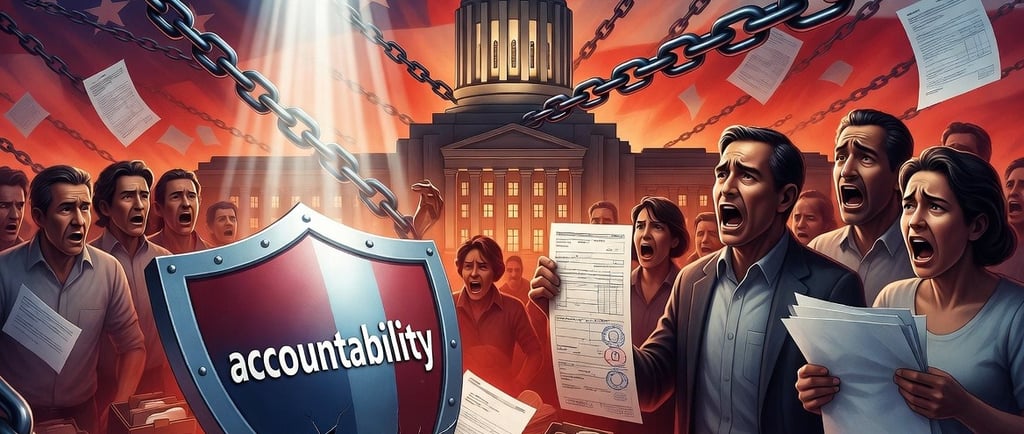
Oregon’s child support enforcement apparatus, anchored by the Department of Justice Division of Child Support (DOJ DCS) and partnered District Attorney offices, touches over 121,000 cases. On the surface, it exists to ensure children receive support. In practice, it often functions as a modern debtor’s prison that disproportionately burdens middle - and low-income families, generates revenue through federal incentives and fees, and shields itself from meaningful public scrutiny.
We are not here to attack individuals. We are holding the process accountable. Where blatant incompetence, procedural disregard, or misapplication occurs, it must be exposed so the system improves for everyone.
Structure, Staffing, and the Enforcement Machine
The Division of Child Support operates 13 offices under Director Andy Gray, coordinating with 15 DA offices across the state. Services include parentage establishment, order creation, modifications, and aggressive enforcement. Staffing has hovered around hundreds of FTE positions (earlier budgets near 575), supported by case managers, attorneys in Civil Recovery and Family Support sections, and IT teams maintaining systems like Origin.
This structure creates layers of bureaucracy that can delay resolutions while fast-tracking collections. Heavy caseloads contribute to errors that real families endure - missed modifications, lost payments, and sudden reinstatement notices.
The Money Trail: Does the State Make Money?
Yes. The program is not a neutral pass-through service.
Federal Title IV-D Incentives: Oregon receives performance-based federal payments tied to collection rates, paternity establishment, and cost-effectiveness ratios. Stronger enforcement directly increases federal revenue flowing to the state.
Fees and Cost Recovery: Application fees, genetic testing charges, and handling costs are deducted or billed. On public assistance (TANF) cases, collections first reimburse the state before reaching the custodial parent.
Budget Reality: The division runs on General Fund, Federal Funds, and these recovered/incentive dollars. While not “profit” in a corporate sense, the structure creates a clear financial incentive to maintain high enforcement volume.
This revenue dynamic helps explain resistance to deeper reforms. When the process itself benefits from volume, families caught in the middle pay the human cost.
Public Sentiment and the Human Toll
Public feedback reveals widespread frustration: cold procedural calls, communication breakdowns, unprocessed paperwork, and enforcement actions that feel punitive rather than supportive. Official self-assessments show high efficiency rates (often 95%+), but these internal samples cannot be independently verified at the individual level due to family law privacy protections.
The language in orders and mailings frequently uses harsh, criminal-adjacent wording for what is fundamentally a civil debt matter. This escalates fear and shame, especially for working dads already stretched thin.
Procedural glitches that reinstate $400/week garnishments after supposed terminations.
Multi-week delays in basic status updates.
Resulting financial strain, work disruptions, and emotional distress that ripple through families.
These effects are not abstract. They push middle- and working-class parents toward poverty, housing instability, and hopelessness - the very outcomes the system claims to prevent.
The Cottage Industry That Benefits
Around the core system has grown a cottage industry: private collection agencies, family law attorneys, compliance consultants, and even some advocacy groups that profit from prolonged conflict and complexity. The more convoluted and punitive the process remains, the more billable hours and service contracts it generates. This creates another layer of resistance to simplification and fairness.
Court Accountability: The Black Box Problem
Challenging the department through circuit court motions or grievances is possible but severely limited. Family law rules protect individual records, leaving only aggregate self-reported statistics. There is no practical way for the public to examine:
Whether cases are categorized and counted correctly.
If judge-ordered internal changes are actually implemented system-wide.
Patterns of delays, errors, or overly aggressive enforcement.
This opacity grants the process near-immunity from sustained public pressure. Even when sentiment turns negative, the lack of transparent data makes meaningful reform difficult.
The Path Forward: Breaking It Down Like Boot Camp
We will keep exposing the issues with precision. The goal is simple: make the process fair, efficient, and truly child-focused. Concrete opportunities exist:
Drastic Cost Reduction: Enforcement and administrative overhead could potentially drop dramatically (targeting 80-90% savings in certain areas) through better technology, streamlined modifications, and reduced reliance on punitive measures that backfire.
Wording Reform: Replace threatening language with clear, supportive communication that distinguishes civil obligations from criminal ones.
Transparency Upgrades: Mandate better public dashboards, independent audits of sample cases, and tracking of judge-ordered fixes.
Incentive Realignment: Shift federal and state rewards toward outcomes like timely modifications and family stability rather than raw collection volume.
One well-documented Portland-area case, drawn from “Uncle Tony’s file,” is moving toward court presentation. It highlights repeated procedural lapses, communication failures, and the human cost of the current system. Media, legislators, and advocates are invited to review the full, anonymized data package for accuracy and draw independent conclusions. Contact through 13chains.com. Sunlight is the best disinfectant.
Everyone Is Accountable - Including the Process Itself
Oregon citizens deserve a child support system that works for families, not one that perpetuates a debtor’s prison dynamic while quietly generating revenue. The middle and working class bear the heaviest burden while a cottage industry thrives in the gaps.
This is not about tearing everything down. It is about rebuilding it stronger, fairer, and more transparent. 13chains.com exists to provide the national directory, stories, resources, and pressure needed to drive that change.
Share your experiences (process-focused). Support reform efforts. Demand accountability from the system, not just the people inside it.
The truth is out. Read 13 Chains: Modern Debtors' Prison. Now the work begins.