What Kids Actually Feel When Child Support Is Sporadic and One Parent Talks Bad About the Other
When child support comes and goes, kids don’t just feel the financial pinch - they feel the absence, the tension, and often the poison one parent pours into their ears about the other. Here’s what that actually does to a child.
PRACTICAL GUIDE
Robert S. Bulka
7/1/20263 min read
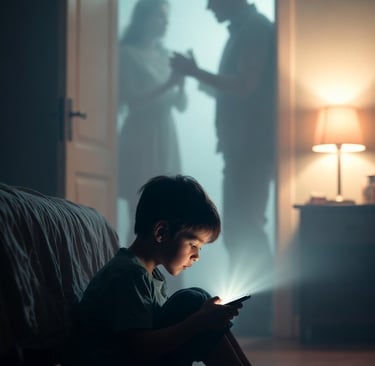
Most people talk about child support like it’s just numbers on paper - money moving from one parent to another. But when that money is late, missing, or completely stops, the real cost shows up in the kids. And it doesn’t show up as anger at first. It shows up as confusion, guilt, and a quiet kind of heartbreak that most adults never see.
I’ve lived on both sides of this - the parent who couldn’t pay and the parent watching what it did to my own children. Here’s what actually happens inside a kid when support becomes sporadic and one parent starts filling the silence with poison.
They don’t understand the money. They understand the absence.
When support stops showing up, kids don’t think “Dad lost his job” or “Mom’s fighting with the state again.” They think:
“Did I do something wrong?” “Why doesn’t he want to see me anymore?” “Is it because I asked for those shoes last month?”
They connect the dots in the only way a child knows how - through their own worth. Sporadic support doesn’t just create financial holes. It creates emotional ones. Every missed payment becomes another quiet confirmation in their head that they might not be important enough.
The parent they live with often makes it worse
Here’s the part nobody wants to say out loud:
When one parent is struggling to pay (or has completely checked out), the parent the kids live with is often hurting, angry, and exhausted. And too many times, that pain comes out sideways - straight at the kids.
They start hearing things like: “Your father doesn’t care about you. If he did, he’d pay.” “We can’t do anything fun because your mom never sends the money.” “He’s probably out spending it on himself while we’re struggling.”
Even when it’s true that the other parent is behind, feeding a child that narrative does real damage. It forces the kid to pick a side. It teaches them that love is conditional on money. And it plants seeds of resentment that can last decades.
I’ve watched this happen. I’ve also been the parent on the receiving end of those stories when my own kids were younger. It’s brutal on every level.
What kids actually carry
Children living in this cycle often grow up with: Guilt - They feel responsible for the tension between their parents. Anxiety around money - Even as adults, they can become terrified of being a burden. Trust issues - Especially with the parent who was badmouthed. Rebuilding that later in life is incredibly hard. Identity confusion - “Am I like the ‘deadbeat’ parent everyone talks about?” Emotional shutdown - They learn to stop asking for things, stop hoping, and stop expecting consistency from anyone.
And the wildest part? Most of them never say any of this out loud. They just carry it.
Breaking the cycle starts with telling the truth
I’m not saying the parent who isn’t paying gets a free pass. Consistency matters. But using children as emotional weapons - whether through badmouthing or withholding access - creates a different kind of damage that money can never fix.
Kids deserve to know two things at the same time: Their other parent is struggling (or made bad choices). That struggle does not mean they are unloved or unwanted.
The system doesn’t make this easy. Sporadic enforcement, long court delays, and parents who weaponize kids against each other all make it worse. That’s why I built the National Child Support Directory - so people can at least see what their state actually does (and doesn’t do) before their kids get caught in the crossfire.
If you’re a parent reading this - on either side - your kids are watching how you talk about the other parent when money gets tight. They’re listening when you think they’re not. And they’re forming beliefs about love, worth, and family that will follow them into their own relationships one day.
We can do better than this.
If this hits home, the full story of how I got here - and what I’m still fighting for - is in my book 13 Chains. It’s not pretty. But it’s honest.
And if you’re a kid (or were one) who grew up in this mess, I see you. You weren’t the problem. You were just caught in it.